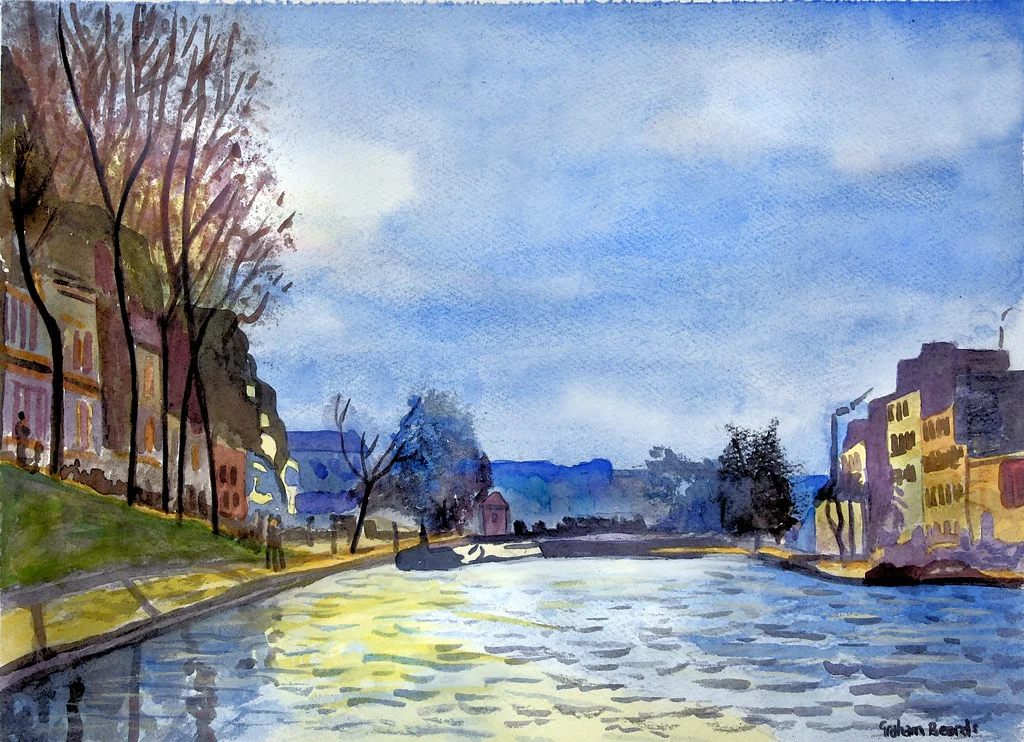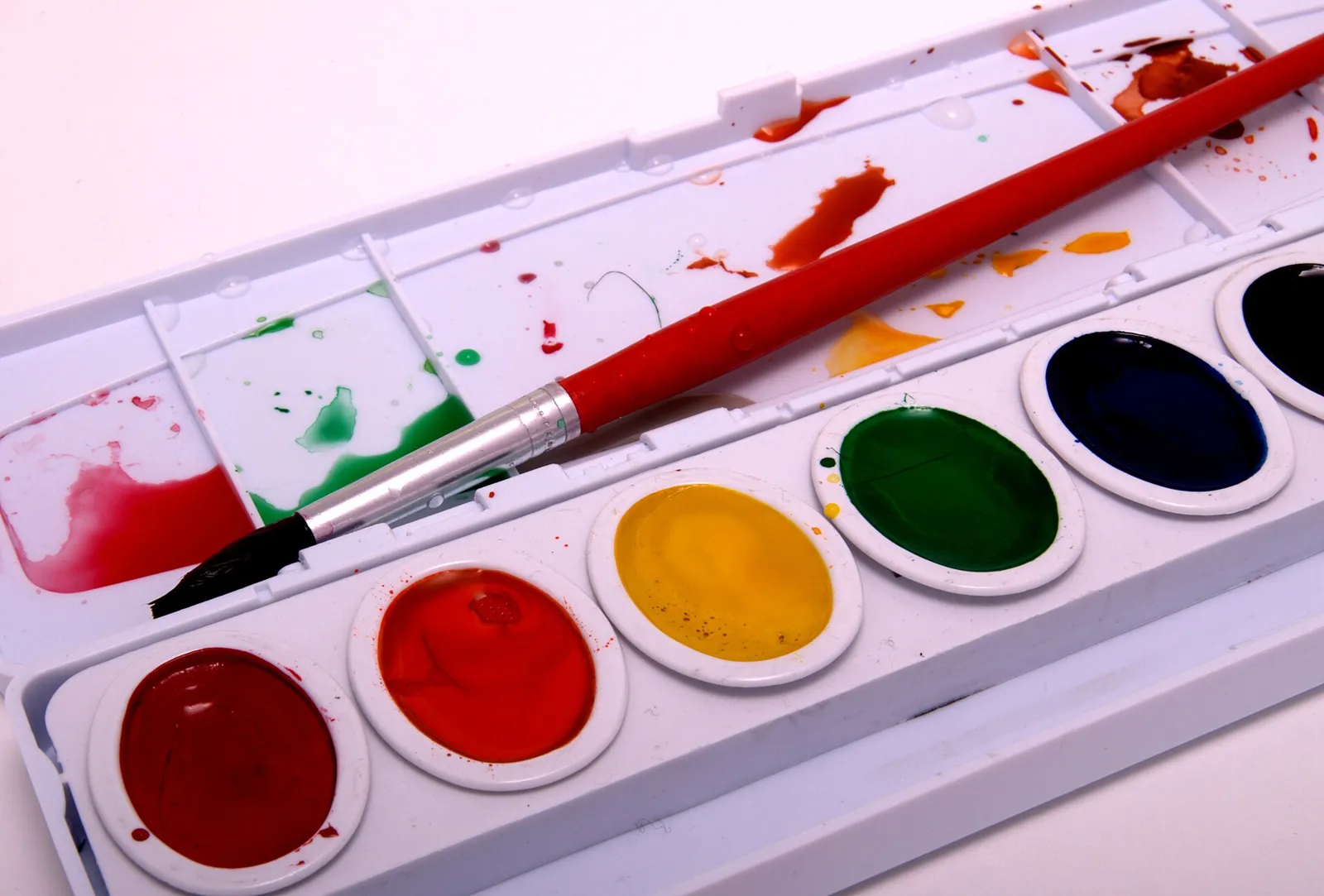
Plenty of people try watercolour once with a children's paint box and printer paper, watch the paper buckle and the colours turn to mud, and decide it is not for them. Watercolour does take practice, but a modest, well-chosen kit removes most of the early frustration. You do not need much, and you do not need the most expensive version of anything.
Paper matters most
If you only spend money on one thing, spend it on paper. Watercolour paper is sized and heavy so that it can take a lot of water without falling apart. Look for:
- Weight of 300gsm (sometimes labelled 140lb). Lighter paper cockles badly when wet.
- Cold-pressed surface, also called NOT. It has a gentle texture that holds water and pigment well and is the usual choice for learning. Hot-pressed is smooth and suits detail; rough is very textured.
- A pad or block for practice. A small pad such as this A5 300gsm cold-pressed pad is plenty for exercises.
Cotton paper behaves beautifully but costs more; save it until you know you are hooked. Taping the edges of a sheet to a board with masking tape before you paint keeps it flatter as it dries.
Paints: student grade is fine
Watercolour paints come as pans (small blocks you wet with a brush) and tubes (paste you squeeze onto a palette). Pans are tidy and portable; tubes are better for mixing large washes. Either is fine.
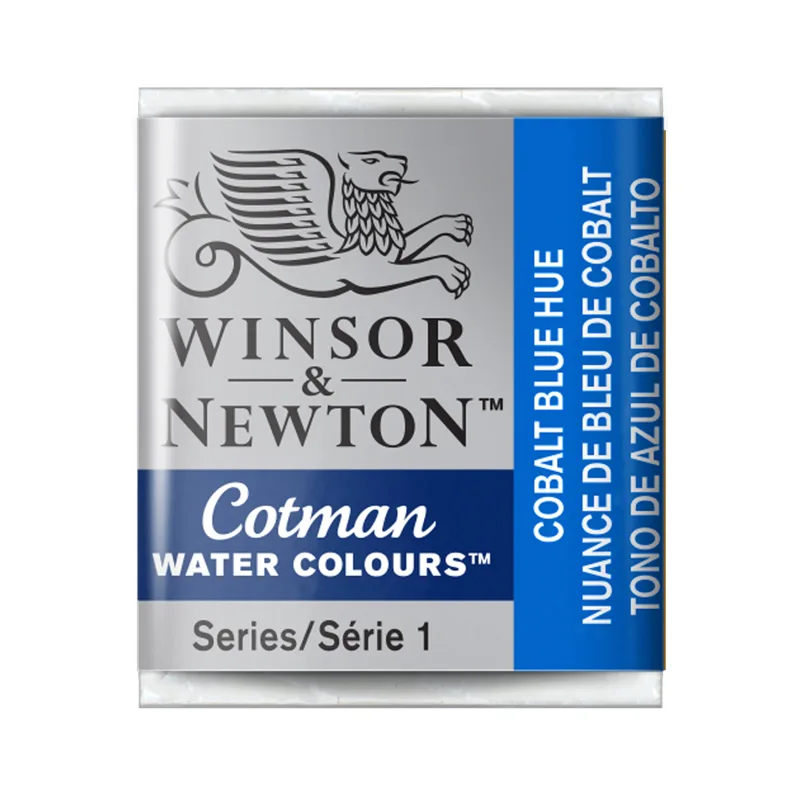
Student ranges are cheaper and use less pigment or more affordable pigment substitutes. Winsor & Newton's Cotman is a long-established student range and widely stocked in the UK. You can buy Cotman half pans one colour at a time to build your own palette instead of buying a big set full of colours you will not use.
A limited palette teaches mixing faster than a big one. A warm and a cool version of each primary (for example, a lemon yellow and a warmer yellow, a crimson and a scarlet, an ultramarine and a phthalo or cerulean blue), plus a brown such as burnt sienna, will mix almost anything.
Brushes: a few, not a drawer full
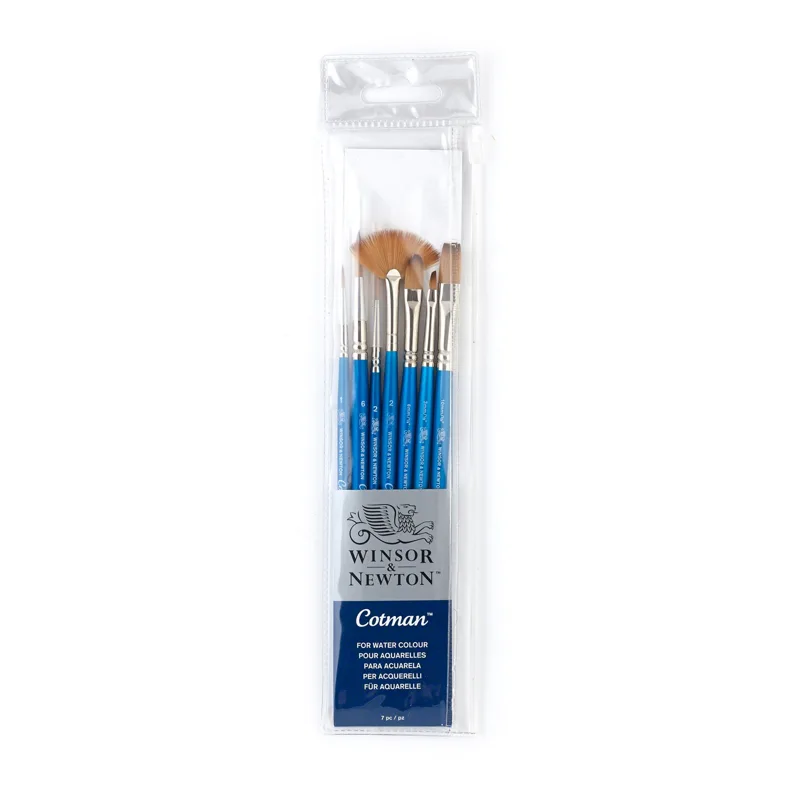
Start with a medium round brush that comes to a good point, a smaller round for detail, and a flat brush for washes. Synthetic brushes made for watercolour are affordable and perfectly good. A set such as the Cotman 7 brush set covers those shapes. Rinse brushes after use, reshape the tip and dry them lying flat or tip-up, never standing in the water jar.
The other bits
- Two jars of water: one for rinsing, one kept clean for wetting paint.
- A white palette or an old white plate for mixing.
- Kitchen roll for lifting colour and blotting the brush.
- A pencil and a soft eraser. Draw lightly, as watercolour is transparent and pencil shows through.
- Optionally, masking fluid, which you paint on to keep small areas white and rub off once dry. Use an old brush or a cheap one, as it can ruin bristles.
First exercises
Before painting a picture, spend an evening learning how water behaves. Our community guide Watercolour for absolute beginners argues that water control is everything, and it is right. Try these:
- Flat wash. Fill a rectangle with even colour, working top to bottom with a loaded brush and keeping a bead of paint at the lower edge.
- Graded wash. As above, but add a little more water with each stroke so it fades from strong to pale.
- Wet-on-wet. Wet the paper first, then drop colour in and watch it spread. This is how soft skies are made.
- Wet-on-dry. Paint onto dry paper for crisp edges. Compare the two side by side.
- Colour chart. Mix each of your colours with every other and label the results. You will refer to it for years.
Then try something simple: a sky and a horizon, a single leaf, a piece of fruit. Paint the same subject three times and you will see the improvement.
Sharing your work and finding more
Paintings are hard to photograph well because the paper reflects light. Our guide to photographing your makes applies just as well to artwork: soft daylight, no flash, and shoot straight on.
For UK paint and paper suppliers, see the painting and drawing guide on our sister site Craft Shop Direct. Painters in the US or Canada will find North American suppliers on CraftShop Direct's painting page, where paper weights are often given in pounds rather than gsm.
When you have a painting you like, even a small one, share it on CraftingUK.
Watercolour kit we'd recommend
Winsor & Newton (ARTdiscount)
Cotman watercolour half pans
Single Cotman half pans, so you can build or refill a small palette one colour at a time.
Winsor & Newton (ARTdiscount)
Cotman 7 brush set
A set of synthetic watercolour brushes covering rounds and flats for a first painting kit.
Stationery Island
A5 watercolour paper pad, 300gsm, 50 sheets
A glue-bound pad of cold-pressed 300gsm paper, thick enough to take washes without buckling badly.
Winsor & Newton
Winsor & Newton art masking fluid, 75ml
Painted on to keep areas of watercolour paper white, then rubbed away once the washes are dry.
Affiliate links. If you buy through these links CraftingUK may earn a small commission at no extra cost to you. As an Amazon Associate we earn from qualifying purchases. We pick the kit ourselves, nobody pays to be listed, and we hide anything the shop shows as out of stock when we check each day. Prices change, so check the shop before you buy.