Watercolour for absolute beginners: water control is everything
Understanding the wet-on-wet, wet-on-dry and dry brush relationships, plus a first landscape to practise them.
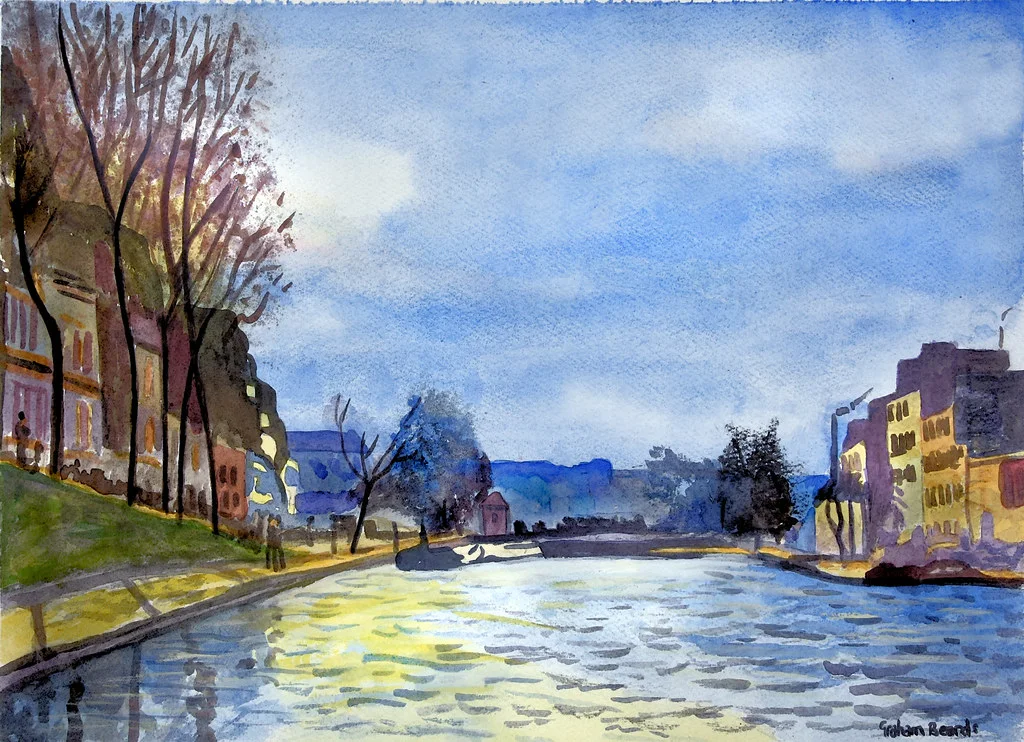
Watercolour is the most forgiving medium to start and the hardest to master. The whole game is how much water is on the paper versus how much is on the brush.
Kit that matters
- Paper: 300gsm cold-pressed, cotton if you can afford a small pad. Cheap paper buckles and blooms and will make you think you're bad at this.
- Paint: a small pan set of artist or good student grade with a warm and cool of each primary.
- Brushes: one size 8 round, one size 2 round, one flat wash. Synthetic is fine.
The three relationships
- Wet on wet: wet paper, then paint. Soft edges, blooms, skies.
- Wet on dry: wet brush on dry paper. Crisp edges. Shapes, details.
- Dry brush: barely damp brush on dry paper. Texture, grass, sparkle on water.
Value first, colour second
Paint a five-step grey scale with one colour before anything else. If your painting reads well in black and white, the colours will take care of themselves.
A first landscape
- Tape the paper down. Wet the top two-thirds and drop in a graded sky, darker at top.
- When almost dry, paint a distant hill in a diluted blue-grey (wet on dry, soft bottom edge).
- When dry, a darker green mid-ground.
- Dry brush a few grasses at the front. Stop.
The rule that saves paintings
When in doubt, stop and let it dry. Most watercolour disasters are one brushstroke too many into damp paper.
Post your first landscape and the second one a week later.
0 comments
Log in to join the conversation.