Sewing machine basics: threading, tension and your first straight seam
Set up your machine with confidence, understand what the tension dial actually does, and sew a seam that stays straight.
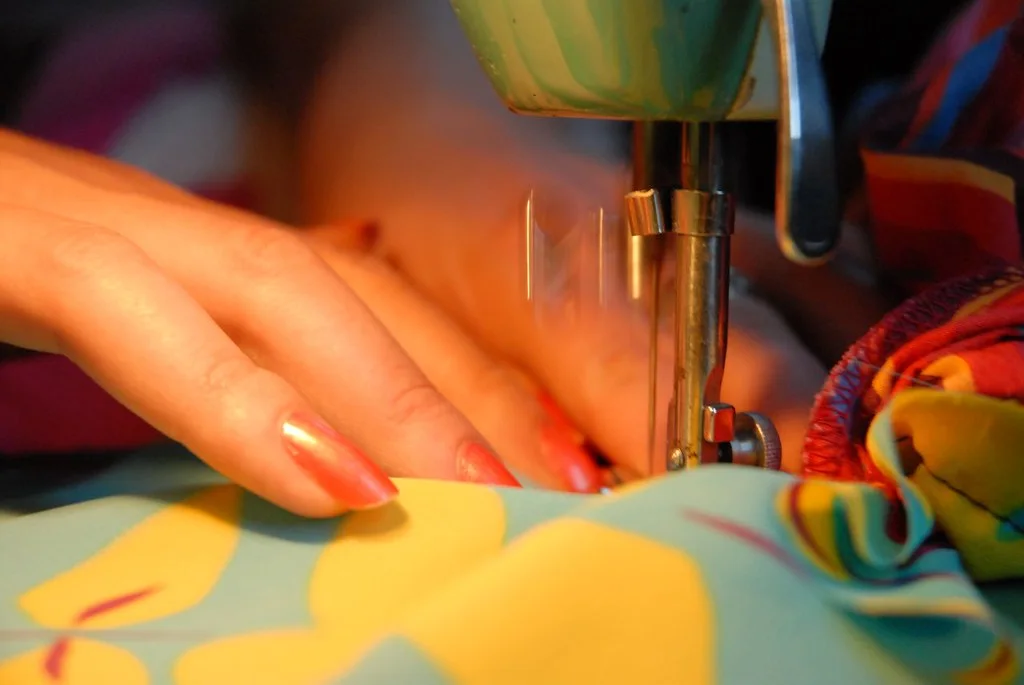
A sewing machine is a simple mechanism dressed up with dials. Once you understand the loop it makes, everything else is practice.
Threading, top and bottom
Follow the numbered path on your machine with the presser foot up (this opens the tension discs so the thread seats properly). Wind a bobbin evenly and drop it in; most modern machines print the direction on the bobbin case. Hold the top thread, turn the handwheel one full rotation, and fish up the bobbin thread. Both tails go behind the foot.
Tension: leave it alone at first
The tension dial controls how hard the top thread is gripped. On a scrap of your actual fabric, sew a line. Loops on the underside mean the top thread is too loose: turn the dial up. Loops on the top mean it's too tight. If it looks like a neat dashed line on both sides, don't touch it again.
Stitch length
- 2.5mm for most seams
- 4mm or longer for basting and gathering
- 1.5mm for tight curves and fine fabric
Sewing straight
Don't watch the needle. Watch the edge of the fabric against a guide line on the throat plate, or stick a strip of masking tape down as a guide. Let the machine pull the fabric; your hands only steer.
Pressing is half of sewing
Press every seam as you sew it, first flat to set the stitches, then open or to one side. A pressed seam looks professional; an unpressed one never will.
First project ideas
- A drawstring bag: two rectangles and a channel.
- A cushion cover with an envelope back: no zip needed.
- Cloth napkins: practise straight hems on all four sides.
Post your first seam, wobbles and all.
0 comments
Log in to join the conversation.