Stranded colourwork without the tears: floats, dominance and tension
The three things that make Fair Isle look crisp instead of puckered, plus the easiest first project.
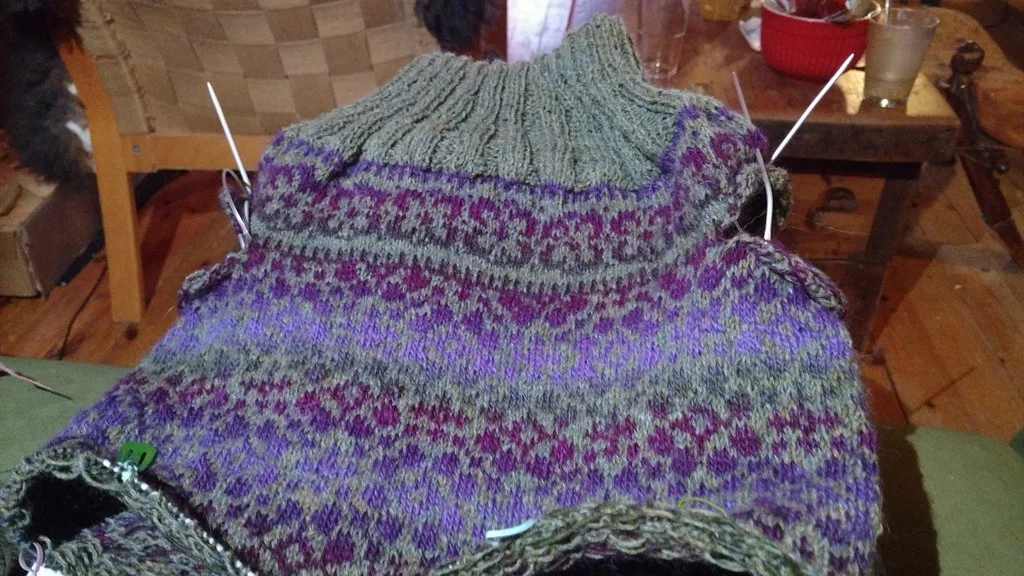
Two colours in one row. That's all stranded colourwork is, and yet it's where a lot of confident knitters stall. These three principles fix nearly every problem.
1. Floats: keep them loose and short
The yarn not in use runs across the back as a float. When you switch colours, spread the stitches on your right needle out before you knit the next stitch, so the float is as long as the fabric it crosses. Tight floats pucker; that's the whole story. Keep floats under 5–7 stitches, or catch them by twisting once with the working yarn mid-run.
2. Colour dominance: be consistent
Whichever yarn you hold below (or to the left, in most grips) will come forward slightly and look bigger. Pick your pattern colour to be the dominant one and keep it in the same position for the entire project. Swap them mid-project and the motif visibly changes weight.
3. Hold both yarns
Two-handed knitting (one colour English, one Continental) is fastest and keeps dominance automatic. If that feels like juggling, hold both strands in one hand with a yarn guide ring or over two fingers. Dropping and picking up each colour is slow and encourages tight floats.
Reading the chart
Charts are read right to left on right-side rows, bottom to top. In the round, every row is a right-side row. Colour the repeat box with a highlighter and use a magnetic board or sticky note to track your row.
Blocking is not optional
Colourwork looks lumpy off the needles. Soak in cool water with wool wash, roll in a towel, and lay flat or stretch over a plate for a tam. It evens out miraculously. Every single time.
Easiest first projects
- A colourwork headband: a short tube with a 6-row motif.
- Mittens: small, quick, traditional.
- A yoke jumper: all the colourwork sits in one band at the top; the rest is plain stocking stitch.
Start with two high-contrast colours in a smooth, slightly sticky wool (Shetland or a non-superwash DK). Superwash and cotton show every imperfection; grippy wool hides them.
0 comments
Log in to join the conversation.