Absolute beginner's guide to crochet: hook, yarn and your first chain
Everything you need to start crocheting today, from choosing a hook to making your first row of stitches.
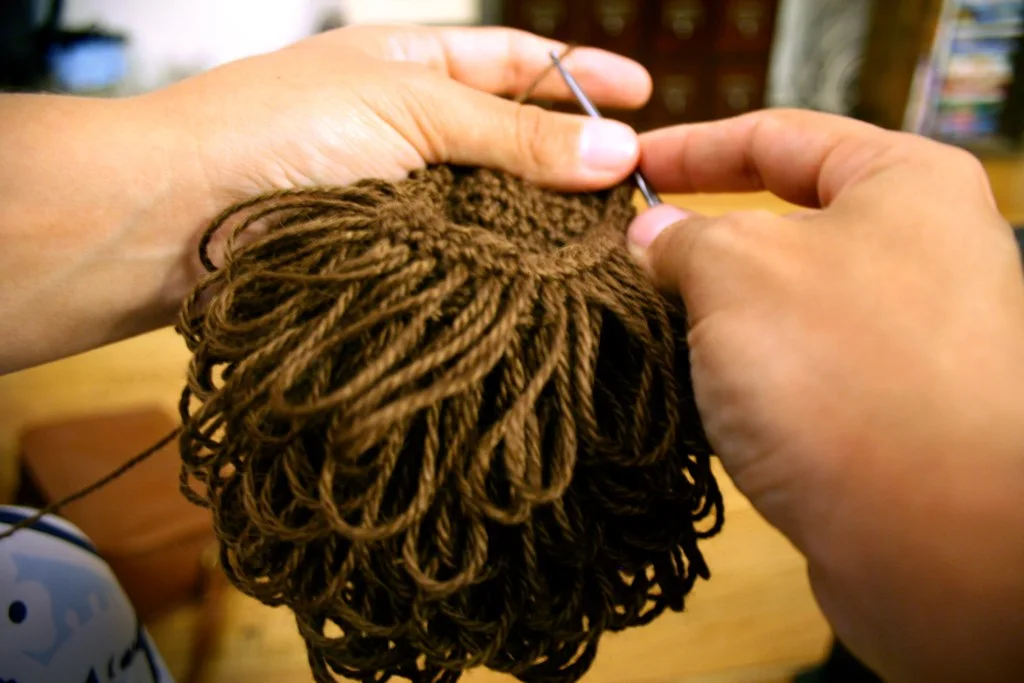
Crochet has one big advantage over most crafts: you only ever have one live stitch. Drop your work, pick it up tomorrow, and nothing has unravelled. Here's how to get from a ball of yarn to your first fabric.
Pick a forgiving hook and yarn
Start with a 5mm or 5.5mm hook and a smooth, light-coloured acrylic or cotton-blend yarn in DK or aran weight. Dark, fluffy or textured yarn hides your stitches, which is exactly what you don't want while learning. Ergonomic hooks with a rubbery handle are kinder on hands if you plan to do a lot.
Hold it however works
There are two classic grips: pencil (hook held like a pen) and knife (hook held like a dinner knife). Neither is correct. Try both for a few minutes and keep the one that feels less awkward. Tension your yarn by weaving it through the fingers of your other hand; loose and comfortable beats tight and precise.
The slip knot and chain
- Make a loop in the yarn, pull the working end through it and pop it on your hook. Snug it up but not tight.
- Wrap the yarn over the hook from back to front (this is a yarn over, or yo).
- Pull that loop through the loop already on your hook. That's one chain stitch (ch).
- Repeat until you have about 20 chains. Aim for chains that look like a row of little hearts and are all roughly the same size.
Your first row: double crochet
In UK terms, the basic stitch is double crochet (dc). Americans call the same stitch single crochet (sc); watch out for this whenever you read a pattern.
- Skip the chain nearest the hook and insert your hook into the second chain, under the top loop.
- Yarn over, pull a loop through. You now have two loops on the hook.
- Yarn over again, pull through both loops. One dc done.
- Repeat into every chain to the end. Count them: you should have 19.
Turning and building fabric
Make one chain (the turning chain), turn your work like a page, and dc into each stitch of the row below, starting in the very first stitch. Count at the end of every row while you're learning. A wobbly edge is almost always a missed or extra stitch at the ends.
Common early wobbles
- Work getting narrower: you're missing the last stitch of each row. Look for it under the turning chain.
- Work getting wider: you're working into the turning chain by mistake.
- Stitches too tight to get into: relax your yarn hand and go up a hook size.
- Can't see the stitches: switch to a smoother, lighter yarn.
Keep going until your swatch is square, then celebrate: that's a coaster. Next stop, the [treble stitch and a granny square](/craft/crochet).
0 comments
Log in to join the conversation.